Best EV Charging Adapters and Cables for Road Trips (2026): J1772, NACS and CCS Picks
Affiliate disclosure: RiderMojo may earn a commission from qualifying purchases, including as an Amazon Associate, at no extra cost to you.
The cheapest way to make an EV road trip less stressful is not a bigger battery. It is a small bag in the trunk with the right adapter in it. North America is in the middle of a plug change: Teslas and a growing list of 2025–2027 EVs use the NACS (SAE J3400) port, while most older non-Tesla EVs use J1772 for Level 2 and CCS1 for DC fast charging. Hotels, campgrounds, friends’ garages and fast-charging networks are a mix of all of them. The right adapter turns a “wrong” plug into a usable one. The wrong adapter is a wasted purchase, or worse, a safety and warranty problem.
A little background on why we care. Before RiderMojo, Driver Mojo gave more than 16,000 Uber rides in a 2019 Nissan Leaf, paying roughly $5 of electricity for about 250 miles of driving and putting 200,000 miles on the car with the original brake pads, thanks to regenerative braking. Today the family car is a Chevy Bolt. Charging is the part of EV life that passengers asked about most, and plug confusion is still the most common question we hear.
How we picked: we compared adapters and one extension cable that were listed and in stock on Amazon when we checked on November 16, 2026, focusing on reputable EV-charging brands and on products that list a safety certification. We have not tested these specific products for this guide. Specs come from the live Amazon listings, and safety rules come from Tesla, Chevrolet and charging-network policies linked below. If you need a whole charger rather than an adapter, see our portable EV charger guide.
Watch the Quick Video Guide
Quick picks: best EV charging adapters and cables for road trips
| Product | What it does | Rating (per listing) | Who needs it | Link |
|---|---|---|---|---|
| Lectron NACS to J1772 (80A) | Lets a J1772 car use Tesla Wall Connectors, Destination and Mobile Connectors | 80A / 240V AC, UL 2252, IP67 | Bolt, Leaf (AC side), Ioniq, Mach-E and other J1772 EVs | Check price on Amazon |
| Lectron J1772 to Tesla (80A) | Lets a Tesla or NACS EV use J1772 Level 1/2 stations | 80A / 240V AC, UL 2251, IP67 | Tesla and NACS-port EVs | Check price on Amazon |
| LENZ J1772 to NACS (80A) | Same job as the Lectron, lighter body | 80A / 250V AC, UL 2251, IP54, 8.4 oz | Tesla and NACS-port EVs | Check price on Amazon |
| Lectron CCS1 to NACS (DC) | Lets a compatible Tesla or NACS EV use CCS1 DC fast chargers | 500A / 1,000V DC, UL 2252, IP67 | Tesla and NACS EVs on non-Tesla networks | Check price on Amazon |
| Parkworld TT-30P to 14-50R | Lets a 14-50 portable charger plug into an RV-park TT-30 outlet | 30A / 125V, 10 AWG | Campers with a 120V-capable portable charger | Check price on Amazon |
| VEVOR J1772 extension (48A, 21 ft) | Adds 21 feet to a J1772 cable for AC charging | 48A, 120–240V, IP66 | Short cables at home or at a friend’s house | Check price on Amazon |
Not on this list: a third-party NACS-to-CCS1 DC adapter for using Tesla Superchargers with a CCS car like an older Bolt. Tesla says Supercharging for CCS1 vehicles requires an NACS DC adapter provided by Tesla or by your vehicle manufacturer, and that third-party adapters are prohibited. We explain the automaker route below.
First, know your plugs
Every adapter decision starts with two questions: what port is on your car, and is the charger AC (Level 1 or Level 2) or DC (fast charging)?
- J1772 is the round AC plug used by most non-Tesla EVs sold in North America before the NACS switch. Hotels, workplaces, parking garages and many home chargers use it.
- CCS1 is J1772 with two big DC pins added underneath. It is the fast-charging plug at most Electrify America, EVgo and similar stations. A car with a CCS1 port also accepts a plain J1772 plug.
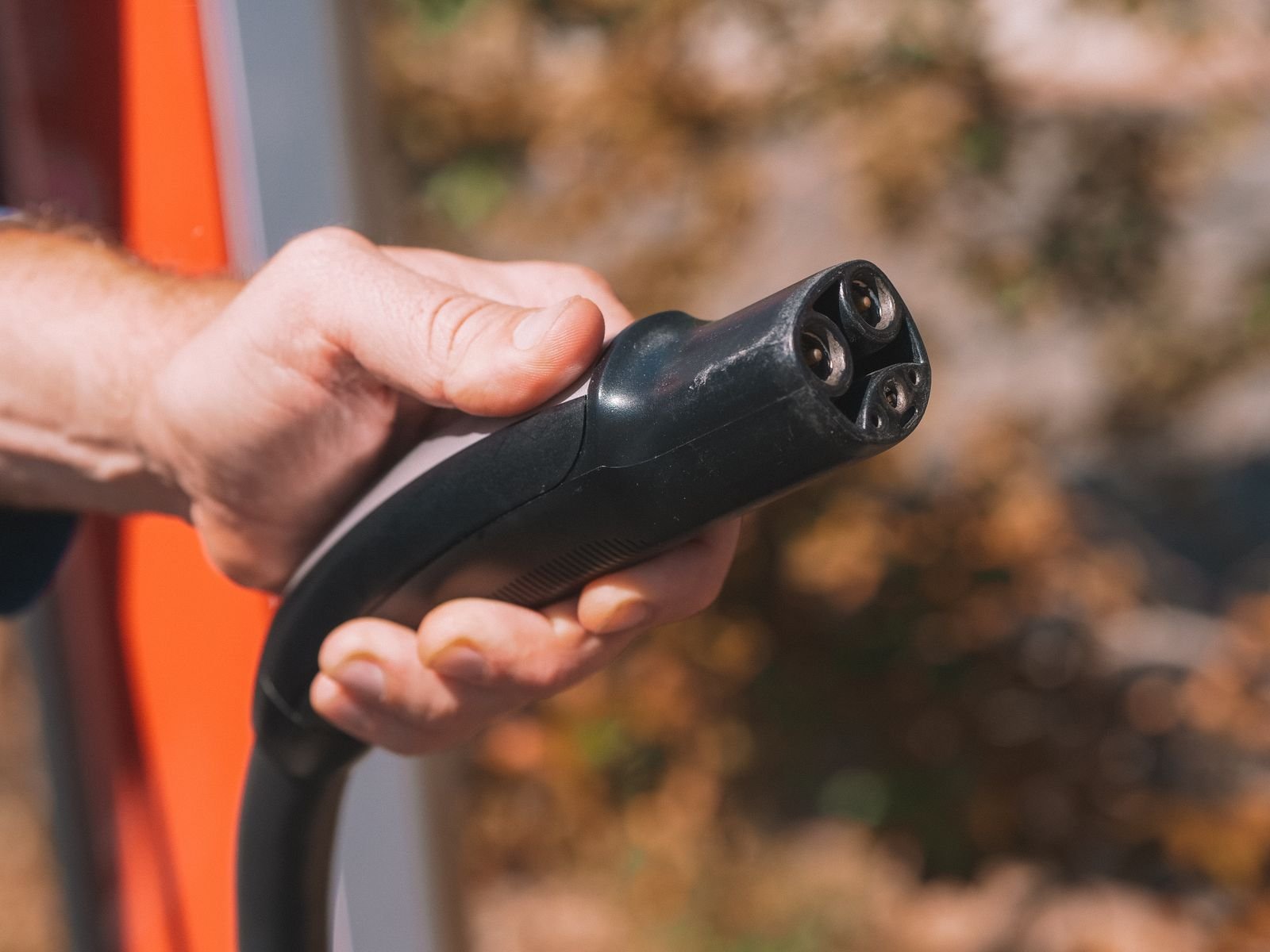
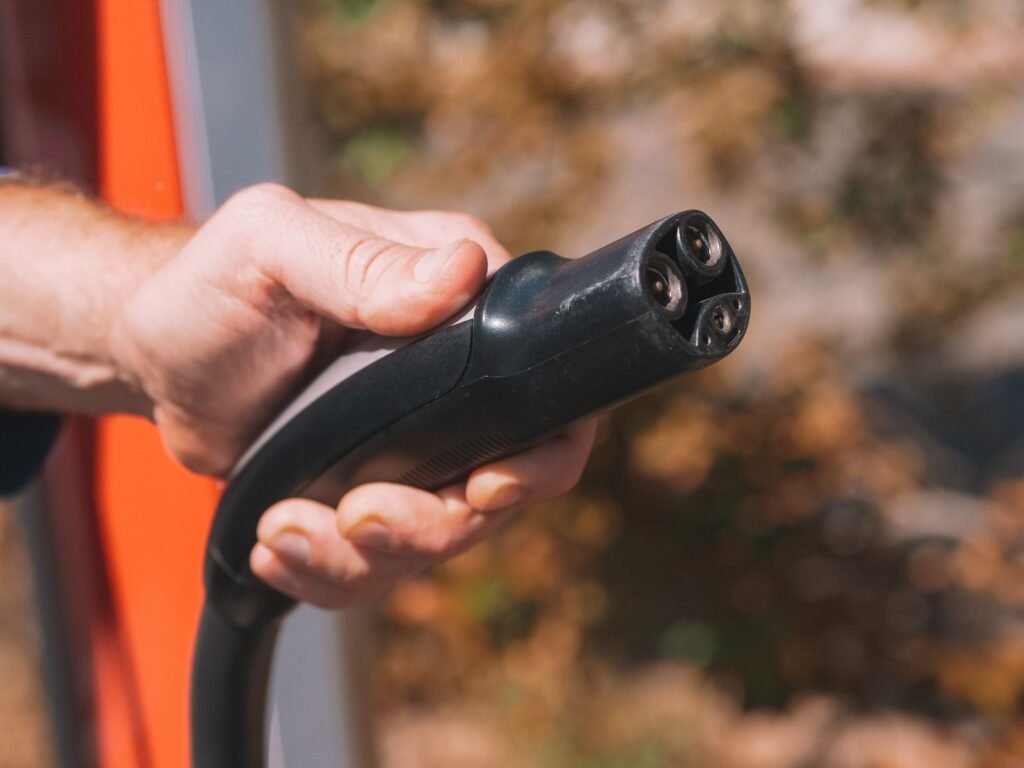
- NACS (SAE J3400) is the slim Tesla-style plug. It carries both AC and DC through the same pins, which is why an AC adapter and a DC adapter can look alike but are not interchangeable.
- CHAdeMO is the older DC plug on cars like the 2019 Nissan Leaf that Driver Mojo drove for rideshare. None of the DC adapters in this guide fit CHAdeMO. A Leaf can still use the AC adapters on its J1772 port.
Rule of thumb: an AC adapter only works on AC chargers, and a DC adapter only works on DC fast chargers. Lectron’s own listing for its NACS-to-J1772 adapter says plainly that it is not compatible with Tesla Superchargers. If you want to see which public stations exist on your route by connector type, the U.S. Department of Energy’s Alternative Fuels Data Center station locator is a free, brand-neutral place to start.
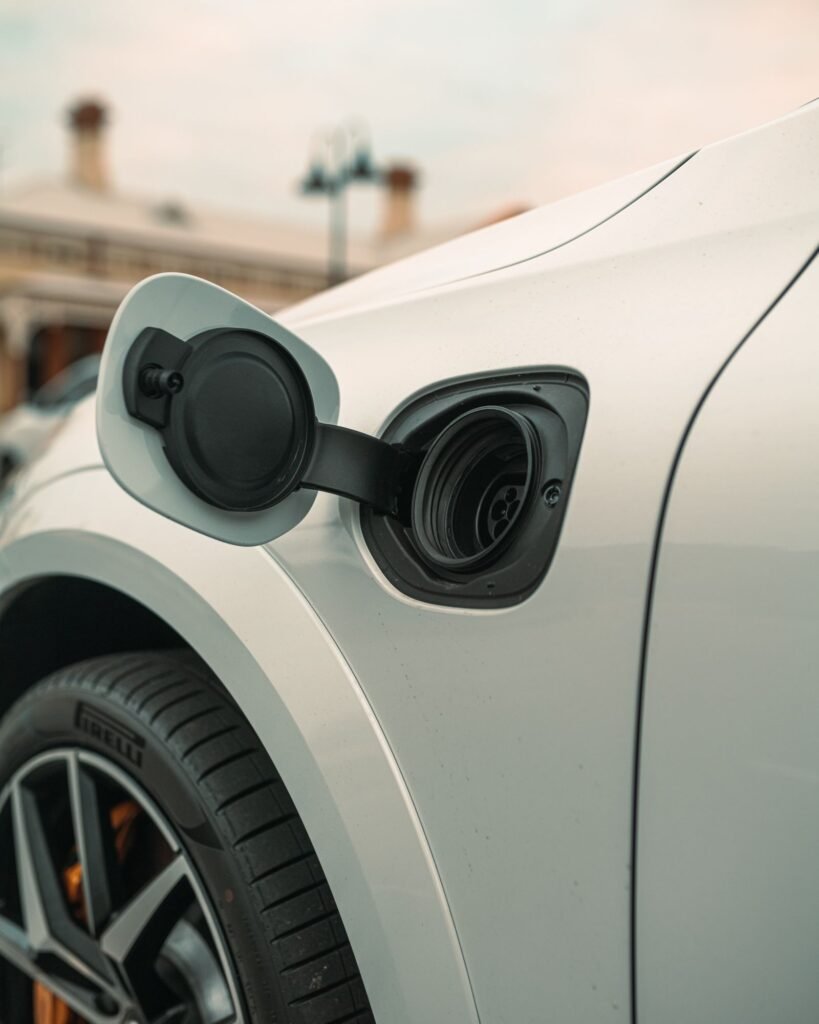
1. Lectron NACS to J1772 Adapter (80A): best for J1772 cars on Tesla AC chargers
This is the adapter we would put in a Chevy Bolt’s glove box first. A lot of hotels and vacation rentals installed Tesla Destination Chargers or Wall Connectors years ago, and some still have more of those than J1772 plugs. With this adapter on the Tesla handle, a J1772 car can use them at Level 2 speeds, limited by whatever the charger and your car can handle.
Lectron says the 80A rating is meant to maximize current flow and reduce heat buildup. Your car will not charge faster than its onboard charger allows, but headroom matters on a part that sits between a high-power connector and your car. The listing also calls it UL 2252 certified with built-in temperature monitoring.
Key specs (per the Amazon listing)
- Input/output: up to 80A, 240V AC (listing: 20,000 W)
- Works with: all J1772 EVs, plus Tesla Destination Chargers, Wall Connectors and Mobile Connectors
- Not compatible with Tesla Superchargers (per Lectron)
- Certification: UL 2252 (per listing)
- Weather rating: IP67
- Warranty: 2 years
Pros
- Opens up hotel and rental-home Tesla chargers to J1772 cars
- High 80A rating with temperature monitoring
- IP67 rating for outdoor use
- Reputable EV-accessory brand with a 2-year warranty
Cons
- AC only; no help at Superchargers
- You still need the property’s permission to use its charger
- Tesla cables are often short and on the left; a right-side or front port may need careful parking
Best for: Chevy Bolt, Nissan Leaf (J1772 side), Hyundai, Kia, Ford and other J1772-port owners who stay at hotels or visit Tesla-owning friends.
Watch: using a Tesla-to-J1772 adapter at a hotel
In this review, EV-olution uses Lectron’s earlier 48-amp NACS-to-J1772 adapter on a Kia EV6 at a Tesla Destination Charger. It is not the 80A model above, but the real-world lessons carry over: read the manual (it asks you to wait about 30 seconds after attaching the Tesla handle before plugging into the car), and plan your parking, because some destination-charger cables are short and Tesla-side.
2. Lectron J1772 to Tesla Adapter (80A): best for Teslas and NACS EVs at J1772 stations
This is the reverse job. If you drive a Tesla or one of the newer NACS-port EVs, most public Level 2 chargers you will find at hotels, offices and town parking lots still have J1772 handles. This adapter clips onto the J1772 handle and plugs into your NACS port.
Many Teslas came with a J1772 adapter in the box, so check your frunk before buying. A spare is still handy if you have two cars, lost the original, or bought a used EV without one.
Key specs (per the Amazon listing)
- Rating: 240V AC, up to 80A (listing: 19,200 W)
- Supports: Level 1 and Level 2 J1772 charging
- Compatible: Tesla Model S/3/X/Y, Cybertruck, and EVs in the NACS alliance (per listing)
- Operating range: -22°F to 122°F
- Weather rating: IP67
- Certifications: TUV and UL 2251
- Warranty: 2 years
Pros
- Glove-box size, plug-and-play
- IP67 and a wide temperature range
- Same brand as pick #1 if you want matching gear for a mixed-plug household
Cons
- AC only; it does nothing at a DC fast charger
- Your car may already have one
- Level 2 speed is still limited by the station and your car
Best for: Tesla and NACS-port EV drivers who use hotel, workplace or public J1772 chargers.
3. LENZ J1772 to NACS Adapter (80A): best lightweight alternative
LENZ is an established EV-adapter brand, and this listing gives unusually specific details: an 8.4-ounce body, compatibility with Tesla OE part numbers, and stated compliance with UL 2251 and CSA C22.2 No. 282-17. It does the same J1772-to-NACS job as pick #2.
The trade-off is the weather rating. LENZ lists IP54, which is fine for normal outdoor use but lower than the IP67 Lectron lists. Either way, keep the adapter off wet ground and store it dry.
Key specs (per the Amazon listing)
- Rating: 80A, 250V AC; Level 1 and Level 2
- Weight: 8.4 oz
- Weather rating: IP54
- Compliance: UL 2251 and CSA C22.2 No. 282-17 (per listing)
- Compatible: all Tesla models and NACS-port EVs such as 2026+ Hyundai, Kia, Rivian and Toyota bZ (per listing)
- Support: 2-year protection plan
Pros
- Light and compact
- Clear certification details
- Two-year protection plan
Cons
- Lower IP rating than the Lectron
- Same AC-only limits as any J1772 adapter
Best for: NACS drivers who want the lightest J1772 adapter they can find from an established adapter brand.
4. Lectron CCS1 to NACS Adapter (DC): best for Teslas that need non-Tesla fast chargers
On a long road trip, a Tesla driver mostly sticks to Superchargers. But a CCS1 adapter is a good backup when the nearest Supercharger is full, down, or far off your route. Lectron’s listing calls it UL 2252 certified and “automaker-approved,” with thermal protection and automatic over-temperature shut-off.
Two important caveats. First, compatibility: Lectron says a Tesla must show “CCS Adapter Support: Enabled” under Controls > Software > Additional Vehicle Info, and the adapter is not compatible with Cybertruck. Second, network rules: in 2025, InsideEVs reported that Electrify America and EVgo terms only permitted automaker-supplied adapters at the time. Before relying on any third-party DC adapter, read the current terms of the network you plan to use. Tesla also sells its own CCS1 adapter through its shop.
Key specs (per the Amazon listing)
- Rating: up to 500A and 1,000V DC (up to 500 kW, depending on car and station)
- Certification: UL 2252 (per listing)
- Weather rating: IP67
- Operating range: -22°F to 122°F
- Weight: 1.5 lb (item weight on listing)
- Not compatible with Cybertruck
Pros
- Opens CCS1 fast chargers to compatible Teslas and NACS EVs
- Thermal protection and over-temperature shut-off
- High headroom: no current EV is likely to max it out
Cons
- Check your car’s CCS support first
- Some network terms may not allow third-party DC adapters
- Heavier and bulkier than an AC adapter
Best for: Tesla and NACS-port drivers who road-trip through areas with more CCS stations than Superchargers, after confirming their car and network allow it.
5. Parkworld TT-30P to 14-50R Adapter: best for RV parks and campgrounds
Campgrounds are full of TT-30 outlets, the 30-amp, 120-volt RV plug. Many portable EV chargers ship with a NEMA 14-50 plug. This one-piece adapter lets that 14-50 plug fit a TT-30 outlet. Parkworld labels it “ONLY for EV or Tesla use, NOT for RV.”
Be realistic about speed. A TT-30 outlet is 120 volts, so you get Level 1-class charging, not Level 2. Under the common 80% rule for continuous loads, a 30A circuit should be kept to about 24A, and your portable charger must be able to run on 120V through its 14-50 plug and be set to 24A or less. Check your charger’s manual before you buy, and always ask the campground first; many charge extra or prohibit EV charging on RV pedestals.
Key specs (per the Amazon listing)
- Plug: NEMA TT-30P (3-prong, 125V, 30A)
- Receptacle: NEMA 14-50R (4-prong)
- Wire: 10 AWG copper conductor
- Listed wattage: 3,750 W
- Warranty: limited 1 year
Pros
- Compact one-piece design
- Turns common RV-park outlets into an overnight top-up
- 10 AWG copper wiring
Cons
- 120V only, so it is slow
- Only works with chargers that accept 120V on a 14-50 plug
- Needs the campground’s permission
Best for: EV campers and road-trippers who already own a 14-50 portable charger that supports 120V and adjustable amps.
6. VEVOR J1772 Extension Cable (48A, 21 ft): best for AC charging with a short cord
Sometimes the charger reaches the parking spot but not your charge port. A J1772 extension cable adds length between a J1772 charger and a J1772 car. VEVOR lists this one at 48A with an IP66 rating and a carrying bag, which is handy for a trunk.
We include it with clear limits. Use it only for AC charging, and never at DC fast chargers: Tesla’s third-party adapter policy prohibits extension cords at Superchargers, and other networks discourage them for DC charging. We did not see a UL listing claim on this Amazon page, and the listing’s warranty field reads “NO.” If you plan to use an extension cable often, our upcoming guide to J1772 extension cables will go deeper.
Key specs (per the Amazon listing)
- Rating: 48A, works with 120V–240V J1772 chargers
- Length: 21 ft
- Weather rating: IP66
- Operating range: -22°F to 122°F
- Weight: 7.5 lb
- Includes: carrying bag, cleaning cloth, cable tie
Pros
- Fixes the “cable is two feet short” problem
- Weather rating and carry bag
- 48A covers most cars’ Level 2 onboard chargers
Cons
- AC only; not for public DC fast charging
- No UL listing claim and no warranty listed
- Extra connection point to keep clean and dry
Best for: J1772 drivers charging at home or at a friend’s house where the charger sits just out of reach.
What about Tesla Superchargers for a CCS car like an older Chevy Bolt?
This is the adapter most Bolt owners ask about, so here is the straight answer. Chevrolet says all GM EVs can charge on the Tesla Supercharger network with a GM-approved NACS DC adapter, which you buy through the Chevrolet Accessories website or the myChevrolet app, plus a payment method saved in the app. Chevrolet also notes that select 2019 and 2020 Bolt EVs may need a software update, and that GM drivers can use select V3 and newer Superchargers. See Chevrolet’s Supercharger page for current details.
Tesla’s Supercharging Other EVs page is just as clear: CCS1 cars need an NACS DC adapter provided by Tesla or the vehicle manufacturer, third-party adapters are prohibited for safety reasons, and an AC adapter must never be used at a Supercharger. That is why we did not put an Amazon button on a third-party NACS-to-CCS1 adapter. If you own a 2027 Bolt, Chevrolet lists it with a native NACS port, so this section does not apply to you.
One more road-trip tip: older Bolts fast-charge much more slowly than a Supercharger can deliver, so the adapter’s power rating is not the bottleneck. A full Level 2 session overnight at a hotel, with pick #1, often fits a Bolt road trip better than a long DC stop. For home charging, see our best EV chargers for Chevy Bolt owners.
Buyer’s guide: how to build your road-trip charging kit
Match the adapter to your port and the charger type
Write down your car’s port (J1772, CCS1, NACS or CHAdeMO) and decide which chargers you actually expect to see. A Bolt owner usually wants pick #1 first. A Tesla owner usually wants pick #2 or #3 first, then pick #4 only after confirming CCS support.
Look for a safety certification and enough current rating
For AC adapters, look for UL 2251 or UL 2252 on the listing and a current rating at or above the charger you plan to use. For DC adapters, UL 2252 is the standard to look for, along with approval from your automaker or charging network.
Check the rules where you plug in
Tesla, many networks and many automakers limit which DC adapters you may use and may not cover damage from unapproved ones. Hotels and campgrounds set their own rules for their chargers and outlets. A quick question at the front desk avoids an awkward morning.
Keep it clean, dry and stored
Dirt and moisture in the pins can cause bad connections. Store adapters in a pouch, wipe the contacts, and never leave an adapter or extension lying in a puddle. Some adapters can be removed from a parked car by anyone, so do not leave a pricey one unattended in a public lot overnight.
Plan parking around short cables
Tesla-style chargers were designed around a left-rear port. If your port is on the front or passenger side, you may need to back in or park close to the line. An extension cable can help for AC at home, but it is not a fix at public fast chargers.
If you are shopping for gear beyond adapters, see our NEMA 14-50 EV chargers and Tesla Model Y accessories guides.
EV charging adapter FAQ
Can I use a Tesla Supercharger with a J1772 adapter?
No. A NACS-to-J1772 adapter is AC only and is meant for Tesla Wall Connectors, Destination Chargers and Mobile Connectors. Lectron’s listing says its adapter is not compatible with Superchargers, and Tesla warns that using an AC adapter at a Supercharger may damage your vehicle.
Do I need an adapter to charge a Chevy Bolt at a hotel with Tesla chargers?
Yes. A 2017–2023 Bolt EV or 2022–2023 Bolt EUV has a J1772 inlet (with CCS1 on cars equipped for DC fast charging), so you need a NACS-to-J1772 AC adapter such as pick #1, plus permission from the hotel.
Will a higher-amp adapter charge my car faster?
Only up to the limit of the charger and your car’s onboard charger. A higher rating mainly gives headroom, so the adapter is not the weak link.
Are third-party DC fast-charging adapters allowed?
It depends on the network and the automaker. Tesla says only adapters provided by Tesla or the vehicle manufacturer may be used at Superchargers. Other networks have had similar terms. Check the current rules before you buy.
Can I charge an EV from an RV park TT-30 outlet?
Often yes, with permission, a TT-30 to 14-50 adapter and a portable charger that supports 120V and can be set to 24A or less. Expect slow, Level 1-class charging.
Have you tested these adapters?
No. We have not tested these specific products for this guide. Our real-world experience is years of daily rideshare charging in a Nissan Leaf and family charging in a Chevy Bolt. Product details come from Amazon listings checked on November 16, 2026, and the safety rules come from the Tesla and Chevrolet pages linked above.
Bottom line
For most road trips, one or two AC adapters solve most plug problems. If you drive a Bolt or another J1772 car, start with the Lectron NACS to J1772 (80A) for hotel and rental-home Tesla chargers. If you drive a Tesla or NACS EV, carry a J1772 to NACS adapter from Lectron or LENZ, and add the Lectron CCS1 to NACS only after you confirm your car and charging network allow it. Campers can add the Parkworld TT-30 adapter for slow overnight top-ups. For Superchargers on a CCS car, buy the adapter your automaker sells or approves. Plug in, follow the rules, and enjoy the drive.