
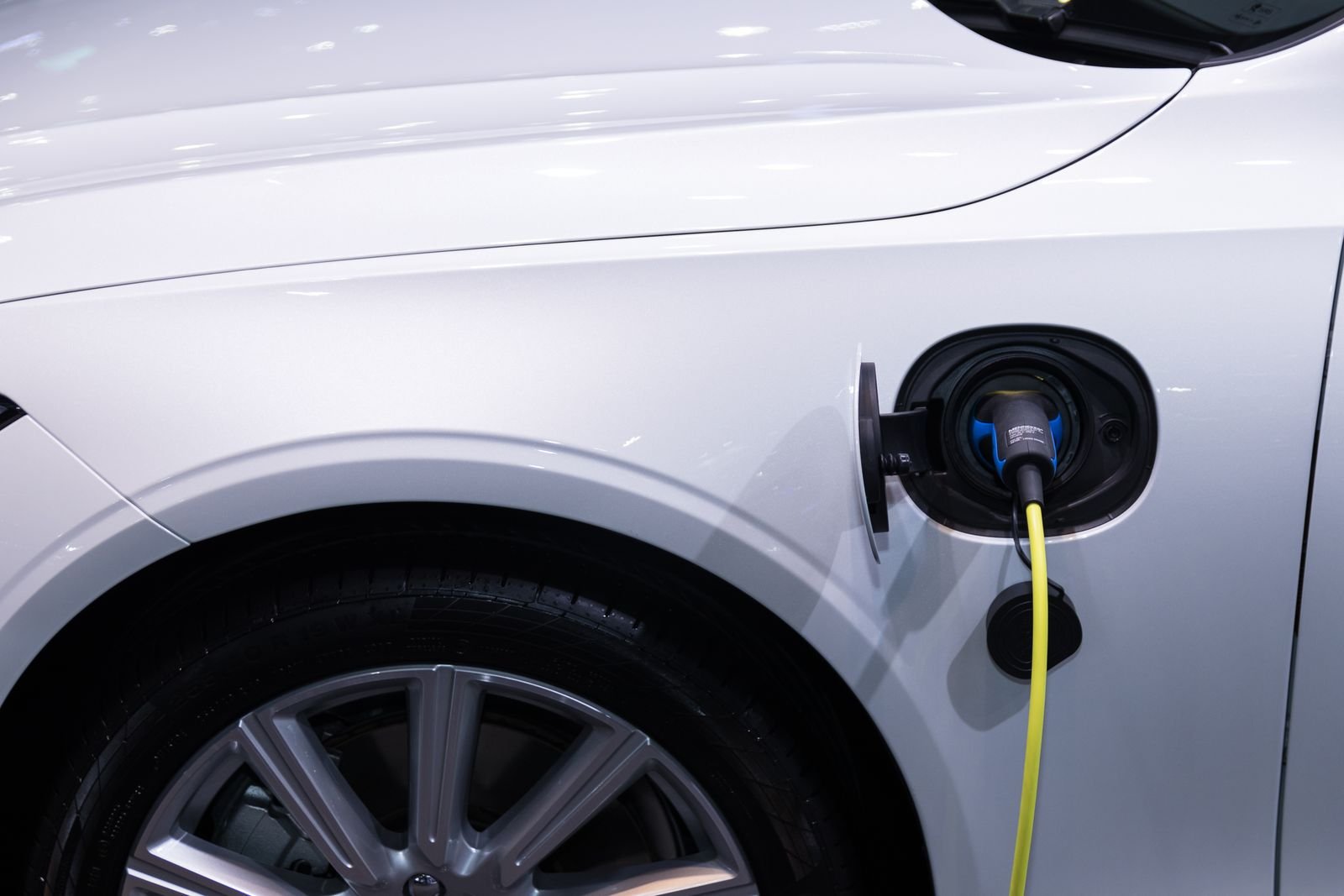
Best Portable EV Chargers (2026): Level 1 & Level 2 Travel Chargers for Home and the Road
Affiliate disclosure: RiderMojo may earn a commission from qualifying purchases, including as an Amazon Associate, at no extra cost to you.
A portable EV charger is the charging cord you keep in the trunk. It plugs into an ordinary wall outlet or a 240V outlet like a dryer or RV-style NEMA 14-50, so you can charge at a relative’s house, an Airbnb, a campground or your own garage without installing anything. The best ones today do both Level 1 (120V) and Level 2 (240V) charging with swappable plugs, which makes them the most flexible charging gear an EV owner can buy.
Below are six portable chargers, plus one NACS version for Tesla-style ports, that were live and in stock on Amazon when we checked on November 2, 2026. They range from a simple 120V backup cord to 40-amp units that charge as fast as many wall-mounted home chargers.
From the driver’s seat: RiderMojo’s founder spent years driving rideshare full-time for Uber in Indianapolis in a 2019 Nissan Leaf. About $5 of electricity covered roughly 250 miles, and thanks to regenerative braking the car went 200,000 miles on its original brake pads. Today he drives a Chevy Bolt, and he has reviewed both home chargers and on-the-road fast chargers. When you live on an EV, a good backup cord in the trunk is peace of mind, especially on trips where the next fast charger is broken or full.
How we picked: We did not hands-on test these specific units for this article. We compared each Amazon listing’s specifications (amperage, supported outlets, cable length, weatherproofing, certifications and warranty), confirmed each listing was live and available, and used U.S. Department of Energy charging guidance. Charging speeds are the manufacturers’ claims and depend on your car.
Watch the Quick Video Guide
Quick Picks: Best Portable EV Chargers at a Glance
| Charger | Best for | Key spec | Where to buy |
|---|---|---|---|
| Lectron Explorer Level 1/2 | Best overall travel charger | 12A at 120V / 24A at 240V, Click-to-Connect 5-15 and 14-50 plugs, 20 ft | Check price on Amazon |
| WOLFBOX PE40 Level 1&2 | Best 40A portable (doubles as a wall charger) | 6–40A adjustable, 14-50 plus 6-20 and 5-15 adapters, 25 ft | Check price on Amazon |
| bokman Level 1 & 2 (32A) | Best value with a live display | 6–32A, 1–12 hr delay timer, 14-50 plug plus 5-15 adapter, 25 ft | Check price on Amazon |
| ELEGRP Level 1/2 (16A) | Lightest pick | 6-20 plug plus 5-15 adapter, about 6.5 lb, IP67, 25 ft | Check price on Amazon |
| Lectron Level 2 40A | Best simple 14-50 charger | 40A / 9.6 kW, NEMA 14-50, 16 ft | Check price on Amazon |
| Lectron Level 1 15A | Best basic 120V backup | 15A / 1.65 kW, NEMA 5-15, 16 ft | Check price on Amazon |
Short answer: For most drivers, the Lectron Explorer is the best all-around travel charger. It switches between a household outlet and a 14-50 outlet in seconds, and there’s a NACS version for Teslas and newer NACS-port EVs. If you want the most speed from a 14-50 outlet and a unit you can also wall-mount at home, pick the WOLFBOX PE40. If you want a dual-level charger with a timer and a screen for less money, look at the bokman 32A.
Level 1 vs. Level 2: How Fast Is a Portable Charger?
The U.S. Department of Energy’s Alternative Fuels Data Center estimates about 5 miles of range per hour on Level 1 (120V) and about 25 miles per hour on Level 2 (240V, at roughly 7 kW). The DOE also notes that eight hours on a 120V outlet can add about 40 miles for a mid-size EV, which covers many people’s daily driving.
A portable charger can only deliver what both the outlet and your car allow. Some examples:
- NEMA 5-15 (regular household outlet): usually 12A, or about 1.4 kW.
- NEMA 6-20 (240V, 20A circuit): up to 16A, or about 3.8 kW.
- NEMA 14-30 or 10-30 (dryer outlets): up to 24A with the right adapter, if the charger maker supports it.
- NEMA 14-50 (range or RV outlet on a 50A circuit): up to 40A, or about 9.6 kW.
Your car’s onboard charger is the other limit. The 2019 Leaf our founder drove tops out at 6.6 kW on Level 2, so a 24A (about 5.7 kW) travel charger gets close to its maximum and a 40A unit wouldn’t charge it any faster. Check your owner’s manual before paying extra for amps your car can’t use.
Watch: EV Pulse breaks down who actually needs Level 2 at home and how far Level 1 can take you. It’s a useful reality check before you buy.
1. Lectron Explorer Level 1/2 (J1772) — Best overall travel charger
Lectron’s Explorer is built around the way people actually travel. It comes with interchangeable NEMA 5-15 and NEMA 14-50 plugs that use a patent-pending “Click-to-Connect” design, so you can switch from a garage wall outlet to a campground or dryer-area 14-50 without hunting for adapters. Lectron rates it at 12A on 120V (1.4 kW) and up to 24A on 240V (5.7 kW), which it says adds 17–20 miles of range per hour on Level 2 and 3–5 miles per hour on Level 1.
For a cord that lives in a trunk, durability matters. The Explorer is rated IP67 against water and dust and works from -22°F to 122°F. The listing says it’s tested to UL 2594, 2251, 2231 and 817 safety standards and is ENERGY STAR and FCC certified. The 20 ft cable reaches most driveway setups. If your car has a Tesla-style NACS (J3400) port, buy the Lectron Explorer NACS version, which has the same 12/24A specs.
Key specs
- Level 1: 12A at 120V (1.4 kW), about 3–5 miles of range per hour (Lectron claim)
- Level 2: up to 24A at 240V (5.7 kW), about 17–20 miles per hour (Lectron claim)
- Plugs: interchangeable NEMA 5-15 and NEMA 14-50 (Click-to-Connect)
- Connector: J1772 (NACS version sold separately)
- Cable: 20 ft
- Protection: IP67, -22°F to 122°F
- Certifications: UL 2594, 2251, 2231, 817; ENERGY STAR; FCC
Pros
- True Level 1 and Level 2 in one kit
- Fast, tool-free plug swaps
- IP67 weatherproofing for outdoor use
- Matching NACS version for Teslas and NACS-port EVs
Cons
- 24A tops out below the 32–40A units on this list
- 20 ft cable is shorter than the 25 ft rivals
- Heavier kit than a basic Level 1 cord (listing shows about 13.3 lb)
Best for: Road-trippers, renters and anyone who wants one charger that works almost anywhere.
2. WOLFBOX PE40 Portable Level 1&2 (40A) — Best 40A portable
If you want home-charger speed from a portable unit, the WOLFBOX PE40 delivers up to 40A on a NEMA 14-50 outlet, which WOLFBOX says adds about 37 miles of range per hour. It also includes NEMA 6-20 and 5-15 adapters, so it can drop down to 240V/20A or ordinary 120V outlets on the road. Current is adjustable from 6A to 40A to match whatever circuit you’re plugged into.
The PE40 is designed to be either a wall-mounted home station or a travel charger, which can save you from buying two pieces of equipment. WOLFBOX lists ETL and NEMA 4 certification, an IP66 rating, an aluminum-alloy body, a 25 ft cable, physical buttons that work with gloves, a 1–12 hour delay timer for off-peak rates and a 3-year warranty.
Key specs
- Output: adjustable 6–40A; up to 40A on NEMA 14-50
- Charging speed: about 37 miles of range per hour at 40A (WOLFBOX claim)
- Plugs/adapters: NEMA 14-50 plus 6-20 and 5-15 adapters
- Connector: J1772
- Cable: 25 ft
- Protection: IP66, NEMA 4, ETL certified
- Extras: 1–12 hr delay timer, LED status, wall-mountable
- Warranty: 3 years
Pros
- Fastest portable option here
- Works as a home wall charger too
- Wide adapter coverage
- Longest warranty on this list
Cons
- Heaviest pick (about 15 lb listed)
- 40A requires a properly wired 50A circuit
- No app or Wi-Fi
Best for: Drivers who want one charger for the garage and the road, with full 14-50 speed.
3. bokman Level 1 & Level 2 (32A) — Best value with a live display
The bokman 32A has a built-in NEMA 14-50 plug and an included NEMA 5-15 adapter for Level 1. Its LED screen shows live voltage and current, and tactile buttons let you choose 6, 8, 10, 12, 16, 24 or 32A on Level 2 so you can match a weaker circuit at a friend’s house. The charger remembers your last setting, and a 1–12 hour delay timer helps you take advantage of off-peak electricity rates.
bokman lists ETL certification, an IP65 enclosure, a TPE cable rated from -22°F to 130°F and protection against ground faults, over-voltage, over-current, surges, short circuits and overheating. The 25 ft cable is long enough to reach across two parking spots. Like the other J1772 units here, Tesla drivers will need a J1772 adapter.
Key specs
- Output: selectable 6–32A on Level 2
- Plugs: NEMA 14-50 plug plus NEMA 5-15 adapter
- Connector: J1772
- Cable: 25 ft TPE, -22°F to 130°F
- Display: LED screen with live voltage and current
- Extras: 1–12 hr delay timer, remembers last setting
- Protection: IP65, ETL certified, GFCI and over-temp protection
- Weight: about 13.2 lb
Pros
- Lots of current settings for unfamiliar outlets
- Live voltage and current readout
- Long 25 ft cable
- No app or account needed
Cons
- Not as well known as Lectron or WOLFBOX
- 32A is slower than 40A units on a 14-50
- IP65 is a step below the IP66/IP67 picks
Best for: Budget-minded drivers who want a dual-level charger with a screen and a timer.
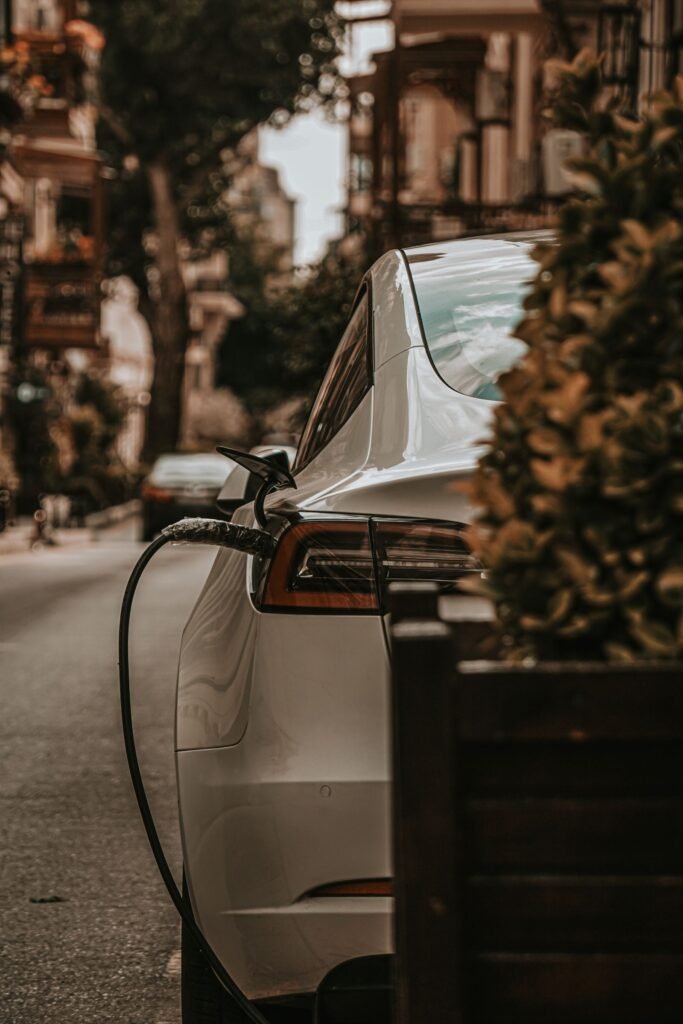
4. ELEGRP Level 1/2 (16A) — Lightest pick
ELEGRP is better known for electrical outlets and switches, and its 16A charger is the lightweight option here at about 6.5 lb. It uses a NEMA 6-20 plug for 240V Level 2 charging at up to 3.84 kW, which ELEGRP says adds about 11–14 miles of range per hour. The included NEMA 5-15 adapter gives you Level 1 charging at 1.44 kW, or about 4–5 miles per hour.
A NEMA 6-20 outlet runs on a 20A, 240V circuit, which is often cheaper and easier for an electrician to add than a 50A 14-50 circuit. That makes this a sensible low-cost home setup as well as a light travel cord. ELEGRP lists an IP67 rating, an operating range of -21°F to 121°F, a 25 ft cable, U.S.-based support and a 2-year replacement warranty.
Key specs
- Level 2: NEMA 6-20, up to 16A / 3.84 kW (about 11–14 miles per hour, ELEGRP claim)
- Level 1: NEMA 5-15 adapter, 1.44 kW (about 4–5 miles per hour)
- Connector: J1772
- Cable: 25 ft
- Protection: IP67, -21°F to 121°F
- Weight: about 6.5 lb
- Warranty: 2 years
Pros
- Light and compact for the trunk
- IP67 weatherproofing
- 6-20 circuit is cheap to install
- U.S.-based support
Cons
- 16A is the slowest Level 2 speed here
- Doesn’t plug into 14-50 outlets without a separate adapter
Best for: Drivers who mostly need overnight top-ups and want the lightest travel charger.
5. Lectron Level 2 40A (NEMA 14-50) — Best simple 14-50 charger
This is Lectron’s straightforward 240V portable unit. It plugs into a NEMA 14-50 outlet and delivers up to 40A and 9.6 kW, with no adapters, app or settings to fuss with. That’s a good match for anyone who already has a 14-50 in the garage, or who travels between campgrounds with 50A RV pedestals.
Lectron lists FCC and ETL certification to the UL 2594 standard, ENERGY STAR, IP65 water and dust resistance and protection against over-voltage, over-current and short circuits. The cable is 16 ft (Lectron points out it’s not 25 ft), so measure your parking spot first. It’s J1772 only and covered by a 2-year warranty.
Key specs
- Output: up to 40A / 9.6 kW at 240V
- Plug: NEMA 14-50 only
- Connector: J1772 (Tesla needs an adapter)
- Cable: 16 ft
- Protection: IP65, ETL (UL 2594), ENERGY STAR
- Warranty: 2 years
Pros
- Full 40A speed
- Simple plug-and-charge operation
- From a well-known EV accessory brand
Cons
- No Level 1 option
- Short 16 ft cable
- No adjustable current for weaker circuits
Best for: Owners with a 14-50 outlet who want fast, simple charging at home or at RV parks.
6. Lectron Level 1 15A — Best basic 120V backup
Not everyone needs 240V. If you mostly drive around town, a good Level 1 cord may be all you need, and it makes a solid backup for the one that came with your car. Lectron’s Level 1 charger plugs into a standard NEMA 5-15 outlet and delivers 15A and 1.65 kW. Lectron says that’s enough to add 40–50 miles overnight.
One caution: 15A is a continuous load, and electrical code generally limits continuous loads to 80% of a circuit’s rating. So make sure you use it on a healthy, dedicated outlet that suits it, and follow Lectron’s manual for outlet requirements. Older garage outlets that are shared with other loads are best avoided. The charger is ETL certified (UL 2594), ENERGY STAR rated and IP65, with a 16 ft cable and a 2-year warranty.
Key specs
- Output: 15A / 1.65 kW at 120V
- Plug: NEMA 5-15
- Connector: J1772
- Charging speed: about 40–50 miles overnight (Lectron claim)
- Cable: 16 ft
- Protection: IP65, ETL (UL 2594), ENERGY STAR
- Warranty: 2 years
Pros
- Works with any standard household outlet
- A bit faster than many 12A factory cords
- Simple and inexpensive backup
Cons
- Level 1 speed only
- 15A draw needs a suitable outlet and circuit
Best for: Short-range commuters, plug-in hybrid owners and anyone who wants a spare cord in the trunk.
Buyer’s Guide: How to Choose a Portable EV Charger
1. Match the plug to the outlets you’ll actually use
Think about where you’ll charge. At home it may be a 14-50 in the garage. On trips it might be a household outlet at a relative’s place or a 50A RV pedestal at a campground. Dual-level kits like the Lectron Explorer, WOLFBOX and bokman cover the most situations. Never force an adapter onto an outlet the charger maker doesn’t support.
2. Don’t pay for amps your car can’t use
Look up your car’s maximum AC charging rate. A car limited to about 6.6–7.2 kW gets little benefit from a 40A charger. Spending less on a 24–32A unit is usually smarter, unless you want the 40A charger to double as your home charger for a future EV.
3. Check the circuit, not just the outlet
Under the National Electrical Code, EV charging counts as a continuous load, so the circuit must be rated at 125% of the charger’s draw. That means 32A needs a 40A circuit and 40A needs a 50A circuit. Many 14-50 outlets in older homes were installed for ranges and may not be rated for hours of continuous charging, so have an electrician inspect them. Industrial-grade receptacles are a common upgrade. If you’d rather install a permanent wall unit, see our guide to the best Level 2 home EV chargers.
4. Avoid ordinary extension cords
Most portable EVSE makers warn against plugging their chargers into standard household extension cords, which can overheat under hours of high current. Buy a charger with a long enough cable (20–25 ft) instead.
5. J1772 or NACS?
Most non-Tesla EVs sold in the U.S. through about 2024 use J1772 for Level 1 and 2 charging. Teslas and a growing number of newer EVs use the NACS (J3400) port. The DOE notes that all Teslas come with a J1772 adapter. If your car has a NACS port, a native NACS charger like the Lectron Explorer NACS removes the extra adapter.
6. Look for real certifications and weatherproofing
Look for an ETL or UL listing to the UL 2594 standard, an IP65 or higher rating if you’ll charge outdoors, and built-in ground-fault protection. All six picks are rated IP65 or better, and every listing except the ELEGRP spells out an ETL or UL safety certification. If certification matters to you, confirm it with ELEGRP before buying.
Watch: State Of Charge walks through what to look for in a dual-voltage portable EVSE, including plug options and real-world charging rates. The charger in the video isn’t one of our picks, but the advice applies to all of them.
Portable EV Charger FAQ
Can a portable EV charger replace a wall-mounted home charger?
Often, yes. Plugged into a properly wired 14-50 outlet, a 32–40A portable unit charges about as fast as many wall chargers. The trade-off is that plug-in units depend on the outlet’s quality, and some, like the WOLFBOX PE40, are designed to be wall-mounted anyway.
Can I charge my EV at an RV park or campground?
Many campgrounds allow EV charging on their 50A RV pedestals (NEMA 14-50), sometimes for a fee. Always ask first, and set your charger’s current to what the pedestal can safely supply.
Is Level 1 charging enough?
For many drivers, yes. The DOE estimates about 40 miles of range from 8 hours on a 120V outlet, which covers a typical commute. Rideshare drivers and anyone with a long daily drive will want Level 2.
Do portable chargers work with Teslas?
J1772 chargers work with Teslas using the J1772 adapter that comes with every Tesla. NACS-native chargers like the Lectron Explorer NACS plug straight in.
Is it safe to leave a portable charger in my trunk?
Generally yes. The picks here are rated for wide temperature ranges, such as -22°F to 122°F for the Lectron Explorer. Keep it in its bag, away from sharp objects, and check the cable and plugs for damage before each use.
Will a portable charger save money compared with fast charging?
Usually. Charging at home or at a destination outlet is typically far cheaper per kWh than DC fast charging. In our founder’s Leaf, about $5 of electricity covered roughly 250 miles, though your cost depends on local rates and your car’s efficiency.
Final Thoughts
The best portable EV charger is the one that fits the outlets you’ll really use and the speed your car can accept. For most drivers, the Lectron Explorer is the most flexible travel charger, and its NACS twin covers Teslas. Choose the WOLFBOX PE40 for full 40A speed and wall-mount flexibility, the bokman 32A for value, the ELEGRP 16A for a light kit, the Lectron 40A for simple 14-50 charging, or the Lectron Level 1 as an inexpensive backup.
Before you buy, confirm your car’s onboard charging rate and the outlets you plan to use, then check current pricing on Amazon.
Subscribe to Driver Mojo on YouTube for more EV, scooter and e-ride content.
Sources
- U.S. Department of Energy, Alternative Fuels Data Center — Electric Vehicle Charging Stations
- U.S. Department of Energy, Alternative Fuels Data Center — Charging Electric Vehicles at Home
- Manufacturer specifications from each product’s Amazon listing, checked November 2, 2026